 Trip to Egypt - with Josh!
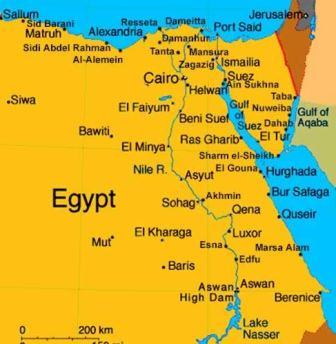
I travelled to Eygpt to work with CARE Egypt, and Josh came along and we made a vacation out of it. We spent 5 days in Cairo, 3 in the Sinai peninsula (2 at a resort on the Red Sea, Dahab, and 1 at Mt. Sinai), and then took a long train ride south along the Nile to spend 3 days in Luxor.
First impressions: fascinating country and somewhat of a sensory overload. It's a middle-income country (basically 2nd world, not in the category of either a 3rd world or a 1st world country), so all of the amneties and infrastructure are in place, which makes travelling much simpler and more comfortable than at the other countries I've recently visited. The mesh of such incredible history with modernity immediately struck us both- for example, the sprawl of the brick slums of Cairo extending to the base of the pyramids. We also became immediately aware of the religious environment - 90% Muslim and 10% Christian - with the profusion of mosques, church steeples and integration of faith into all aspects of life and conversations.
Click here to view all of our pictures.
Sep 1, 2007
Salam Alaykum

Aug 31, 2007
Cairo
 We spent 5 days in the mega-city of Cairo, home to 17 million people. The best part is merely wandering around and observing. It is so dirty and huge and loud and exhausting, but also so stimulating and exciting and beautiful.
A few of the highlights of our time in Cairo:  - We spent an evening with the refugee woman I tutor in atlanta, Selwa, and her neice and nephew. Josh and I have become very close to her and her sons, and she happened to be in Cairo while we were there visiting a bunch of her family that still live there! (They're from sudan but were refugees in cairo for 12 years so they consider it home). They picked us up and took us to Islamic Cairo, which is the ancient islamic quarter of the city. I never would have imagined that I would be visiting a mosque with a woman in a burkha (interestingly, she wears the full burkha (everything but eyes) in Eygpt, but doesn't in Atlanta - she just wears the hijab, or head covering.) Having them as tour guides in this quarter of the city, especially with our visit to Al-Azhar, a mosque and Islamic university that has been functioning since 988 AD, made such a difference in giving us access and insight!
- We had a fascinating trip out to the slums where the outcasts of Cairo live in the city's garbage dump, responsible for manually sorting through all of the garbage that they live in. The smell and poverty and unsanitary conditions were quite unlike anything either of us have ever seen. And of course, amidst society's outcasts, a thriving Christian community has emerged. A Coptic priest moved into their midst and started ministering to them, and constructed a huge church in a cave in the stone hill where the people live. It was enormous and stunning and somewhat surreal to see in this country. Click here to read more about St. Simon the Tanner Cathedral, or the "cave cathedral", as it as been nicknamed.
- We had one incredible evening getting lost in the narrow streets of the old part of the city: eating amazing falafel and egyptian pastries from street stalls that charged us a quarter; stumbling upon beautiful old mosques and getting one of the  worshippers to let us climb to the top of the minaret, with the most breathtaking view of the night-time city lights; having a shai (egyptian tea) at a picturesque ahwa full of old men playing backgammon; and chancing upon a free cultural performance of Sufi dancing - the whirling dervishes. Just one of those amazing travel moments when everything actually works in your favor rather than being a hassle!
- On our last night, we spent several hours over some delicious Egyptian food with a friend of ours, Darren Kennedy. Through the connection of several mutual friends, we met him and his wife Elizabeth during our studies in Edinburgh. They have been missionaries in Cairo through the PCUSA for 8 years. We had a wonderful time catching up with Darren and discussing their family's work and life in Cairo. Click here to read more about the Kennedy's and their work in Cairo.
Aug 28, 2007
Luxor
 We took a 10 hour train ride south along the Nile to Luxor, which has been inhabited for 6000 years! It was the capital for much of Pharonic rule and was also the center of religious and ceremonical life in ancient Egypt. It has the most preverved ancient monuments - King Tut's tomb was found here. There's the Valley of the Kings, where many of the tombs of the Pharoah are still in tact - we walked down into 3 of them, amazing tunnels into the heart of the mountains covered in heiroglyphics. There are several temples constructed for various pharoahs for themselves and the gods - we visited Hatshepsut's (the famous woman pharoah), Ramses II's, and Amenhotep II's (called Luxor temple).
And then there's the amazing Karnak temple, our favorite site. It wasn't so much a temple as a complex - it measures about 1 mile by 800 meters. Each successive pharoah would add to the place and try to outdo each other. We just couldn't capture the scale in pictures! There are multiple sanctuaries within it. The most amazing part was the Great Hypostyle Hall - a forest of 134 towering stone pillars, bigger than both St. Peter's in Rome and St. Paul's in London combined!
Beyond the monuments and the history, we enjoyed spending time in a smaller town on the banks of the Nile, with more horses than cars and farmland full of sugarcane.
Aug 26, 2007
Sinai
 We stayed in Dahab, a Bedouin (desert tribe that are the traditional inhabitants of the Sinai peninsula) fishing village that has turned into a European and Arab resort town on the Red Sea. It was incredibly beautiful and relaxing. We spent a lot of time snorkeling in the coral reef in front of our hotel and saw the most unbelievable marine life. I've never seen anything like the fish and the colors - there are apparantly more types of tropical fish in the Red Sea than anywhere else in the world. So that was a real highlight.
We then took a short bus to the middle of the peninsula to the small Bedouin village at the base of Mt. Sinai. It is the most striking landscape - sooo bare and stark and craggy, but incredibly beautiful. We read the Exodus story before leaving and had such a vivid picture of Moses leading his reluctant people through the desert. No wonder they were complaining! It is so harsh with the bare rock and sand and blinding sun.
The way the Bedouin people still live as nomads, surviving off of such a harsh land, in caves and stone huts, is unbelievable. It's as though nothing has changed in thousands of years. Staying in the village was great - we didn't see a single other tourist while we were there. We stayed at a camp run by a local Bedouin Sheikh and it was a really wonderful experience, although i must admit we were thrilled to check into our nice hotel in cairo and get a hot shower, air conditioning and our own bathroom! The real highlights of our trip were visiting St. Katherine's Monastery, the monastery at the base of Mt. Sinai (which is locally called Mt. Moses), and climbing the mountain itself. The monastery has been a practicing monastic community since 500 AD, and is the oldest active monastery in the world. They have an incredible collection of iconic art and christian manuscripts that have been passed down throughout the centuries. It was a very spiritually enriching visit.
And then we hiked up the mountain, which was grueling. It's a high mountain to begin with, with some very steep parts, but it was really the incredible heat with the sun beating down with no shade in sight that made it tough on us. But it was a moving pilgrimage for both of us. We read some psalms at the top while watching the sunset, and then hiked down by moonlight (which was tricky, as i of course forgot to pack the flashlight.)
Jun 25, 2007
Dubai
View my pictures of Dubai here.
Dubai was crazy. It’s literally a city rising out of the desert, in the middle of nowhere. It felt to me like an incredibly expensive combinatin of Vegas and Disneyland, and you can’t decide to deride it or be fascinated by it. Little bit of both. A refugee woman I work with in Atlanta, Selwa, has extended family in Dubai, so her neice Reem and nephew Mohammed picked me up with a big red sign with my name. They took me all over the city and didn’t take me back to the hotel until 3 am - and we didn't have dinner until midnight, which is apparantly quite common here!!! I was starving after my long flight!
It was interesting hearing their perspective on the city and its development, as they were both born and raised here. They took me to the beach, which wa s beautiful- crystal blue water and the whiteness of desert sand. Then they showed me all of the ridiculous marvels of modern Dubai – that sailboat 7 star hotel is more surreal than you could imagine. Same with the tallest building in the world, the Palm island that extends out into the ocean where some of the world's wealthiest people have homes on individual islands shaped like palm fronds, and the ski resort inside of the mall, which you have to see to believe. It is literally a ski resort - big slopes, lifts, lots of snow, people in snowsuits, and outside it's 110. Crazy. Apparantly each person living in dubai uses 8 times more energy than anyone in the rest of the world. There are more malls than I have every seen in my life, each trying to outdo the others with their extravagance.
After the tour, they took me to this amazing Lebanese place with a spread the size of the table – fresh bread, salads, homemade hummus, incredible schwarmas and kebabs. And of course it's "harem" to thrown food away in Islam, which is incredibly difficult given the unending amount of food that I'm always served in Muslim homes and countries!
The next day I took a bus tour of the old city. I thought that I would be most interested in seeing the historic parts, thinking that they would be more culturally interesting - the old city, the mosques, the ancient markets, the old pearl diving area that put the city on the map, etc. However, most of it has been turned into tourist attractions and it's quite difficult to picture the city as it was - an old pearl diving village. Seeing the mosques was the highlight - the different architecture is really interesting and beautiful. But besides that, the crazy hotels and malls and skyrises are what was culturally interesting. A bit sickening, perhaps, but interesting nonetheless =-).
Jun 20, 2007
Bangladesh photos
 View my pictures from Bangladesh here.
Bangladesh Statistics
Population: 138.4 million
Urban Population: 26%
Major Ethnic and Linguistic Groups: Bengali - 98%
Religions: Muslim - 83%
Hindu - 16%
Population Growth Rate: 2.06%
Life Expectancy: 61.3 years
Infant Mortality: 66 per 1,000 live births
Under Five Mortality: 77 per 1,000 live births
Maternal Mortality Rate: 400 per 100,000 live births
GNP Per Capita: $370
Percentage of Literate Adult Males: 54%
Percentage of Literate Adult Females: 32%
Jun 17, 2007
Thoughts on Bangladesh
Well the highlight of my trip was that I got bumped up to business class on my Emirates flight! I was so excited. I was in the very back of the plan in the middle between 2 very stinky men. And then up to business with mimosas and a tv and incredible vegetable curry and a chair that completely reclined. That is the way to travel internationally, seriously.
As for Dhaka - it's the most densely populated city in the world, and I struggled to feel love and compassion for the mass of humanity - it was much easier to be annoyed! it’s certainly the poorest city I’ve ever been to – everything, no matter how nice, has that beat-up run down look. Even the "wealthy" area looks very shabby and downtrodden. But then there’s the contrast with the vibrancy of people and animals and fruit and so much life everywhere. And the colors - the woman wear the brightest saris, which was interesting - they don't wear hijabs as much. Which I was expecting given that it's a Muslim country. It's an odd mixture of Indian and Islamic culture.
Tourism in Dhaka is nonexistant. So of course that made it incredibly difficult to get around and see anything. I was really only able to be an outside observer of the mosques and markets and life along the river. I tried to walk around by myself but it’s fairly impossible to do so. There are very few women out and about - it’s all men on the streets, at the market, working at the hotel, everywhere, so the moment I step out of the car I am swarmed. I never felt threatened, it was just obnoxious and immobilizing. I have never felt so constrained from actually engaging with the people and the culture - a very frustrating experience.
The best and worst part of the trip was the 8 hour drive south through the country to one of the rural villages where CARE works (see the story I wrote about the small business development projects with women). I got to see so much of the country and the traditional way of life - ancient fishing nets, Islamic madrassa schools with children in uniforms, rice paddy fields, etc. I loved being able to observe everything. The "worst" bit comes in with the madness of the driving, especially once it hit nightfall. A one-lane road through the countryside with cars hurtling toward you with abandon - I was in the front seat and literally had to close my eyes because I was having so many panic attacks that I was about to be hit head-on. We witnessed 3 accidents - a car smashed into a rickshaw and flipped it over, a bus careened off the side of the ride and landed on its side, and, quite disturbingly, a car hit a man and killed him. I saw him laid out in the middle of the road, in full white tunic and hat, with a huge pool of blood draining out of him.
Spending time with the women entrepeneurs was inspiring and really encouraging. And the converstions I had on the drive with the Bengali CARE staff was really interesting as well, learning about Bangladesh's economy, the garment industry (check your clothes - 80% of the industry is now made in Bangladesh), and the role of women in society. I left with a lot of hope for the country and the way that development is occuring there, which is certainly not always the case.
Jun 15, 2007
Female entrepeneurs in Bangladesh
 I travelled 9 hours south of the capital city of Dhaka down to Chittagong to interview Selina and write her story for CARE. Selina is on the far left and the other 4 women are her employees.
Then, 3 years ago, a CARE representative approached her and asked if she wanted to join the Community Business Group in her village. CARE has implemented more than 90 such groups throughout Bangladesh by working with community leaders to identify the poorest people in each village, helping them organize, and providing trainings. These self-managed groups are primarily made up of women, and they band together to implement initiatives for economic development, including pooling their savings together for investing in activities such as agriculture and small businesses.
Traditionally one of the most conservative parts of the country, CARE’s work with women in Chittagong initially met significant resistance from village leaders. In the past few years, however, CARE has seen much progress as communities are seeing the benefits of involving women in society and in the workforce. The Community Business Groups have proven to be a powerful way for women to collaborate on income-generating opportunities for themselves and their families. With her husband’s approval, Selina joined her village’s group and attended one of the trainings conducted by CARE on basic financial management. She quickly showed an aptitude for numbers and was nominated as the group’s cashier in 2005.
When CARE decided to implement a new program called the Rural Sales Program, an innovative collaboration between CARE, rural women, and the private sector, they decided to draw on women in the Community Business Groups to participate. CARE has been working in Bangladesh since 1949, and has focused on economic development for over 20 years. In the Rural Sales Program, CARE helps rural women gain access to employment opportunities with the private sector, training them in sales, accounting, and business skills and organizing them as an enterprise group of sales representatives. In the process, the private sector is able to enter the rural market and rural people gain expanded access to products.
Bata, an international shoe company, agreed to partner with CARE in the Rural Sales Program early on. When CARE was looking for a manager of the Bata shop’s hub in the local village market, they approached Selina. “I think they came to me because of my potential and skill with numbers,” she says. The Community Business Group agreed to invest in her business and she opened the shop in 2006, becoming the only woman seller in the marketplace. “When I began, all of the other shop managers in the market saw me as a woman. But now they see me as a businessperson, a competitor, and they don’t even notice that I’m a woman any more because my business is the most popular in the neighborhood.” Last year, Selina’s shop was the most successful sales hub of Bata shoes in Bangladesh, and the company honored her at a ceremony and awarded her a cell phone.
The shop is well-stocked and meticulously organized, with shoes displayed on racks from floor to ceiling and snacks and toiletries hanging in cabinets behind the counter. Selina has expanded her business to include Square snack products and Unilever toiletries, other international companies partnering with CARE in the Rural Sales Program. Her shoes have become a sought-after luxury item, bringing in larger dollar amounts, whereas the snacks and small soaps and toothpastes are the most commonly purchased item, giving her consistent income on a day-to-day basis. To increase the scope of her business beyond the marketplace, Selina has employed 4 women from different villages as saleswomen, responsible for taking the shop’s goods door to door in their areas.
It is very uncommon for women to be working at all, and especially rare for them to be managers. Selina notes, “It was difficult during the first few months. People didn’t believe in me or my products, saying that they weren’t really from an international company and that the quality was better if you buy in the city. I had to gain their respect.” The saleswomen she employs agree, speaking of their challenges in the beginning. “People didn’t trust that we were really from Bata when we knocked on their doors. Now they seek us out to place orders. We even received several orders from schools to supply the shoes for uniforms!”
 Selina’s husband quit his job as a day laborer and they are now operating the shop together, enjoying the benefits of a family-run business. Their youngest son, who has yet to begin school, ‘helps’ in the shop during the day. Selina boasts that she has the income for her older son and daughter to continue on to secondary school, noting that their education level will soon surpass her own. For Selina, perhaps the most unusual feature of her new role is her increased mobility, which is quite unusual for women in this area who rarely leave the confines of their homes, much less their villages. She proudly explains that she frequently travels from the village to the Bata office in the capital city of Chittagong, a journey of about 2 hours, in order to restock her supplies.
Most importantly, Selina and her employees are thrilled with the increased livelihood security and quality of life that their new jobs provide. Assia, an elderly widow, was struggling to provide for her 5 daughters and 1 son. From the income she has earned as a saleswoman, she was able to move into better quality housing, send her daughters to school, and purchase poultry to raise for additional income. She sums up the feelings of the women, “Working here has improved my family’s livelihood and is better than working as a day laborer. It is dignified. I am selling products of an internationally renowned company.”
Selina and her employees have seen great success in only a year, and they plan to continue expanding the scope of their business and increasing their capital. They hope to move to a larger shop, which barely holds all of the products for sale, and make it into more of a showroom. Throughout Bangladesh, women like them are making similar strides through the Rural Sales Program. After only 2 years of the program, over 1,000 formerly destitute rural women are currently employed as a powerful sales force, and more and more companies are starting to take notice."
May 22, 2007
Mozambique
 View my photos from Mozambique here.
Mozambique Statistics
Population: 20.2 Million (DESA 2004)
Urban Population: 36%
Major Ethnic and Linguistic Groups: Indigenous tribal groups - 99%
Religions: Traditional beliefs - 50%; Christian - 30%; Muslim - 20%
Population Growth Rate: 0.82%
Life Expectancy: 41.6 years
Infant Mortality: 100 per 1,000 live births
Under Five Mortality: 145 per 1,000 live births
Maternal Mortality Rate: 1,000 per 100,000 live births
GNP Per Capita: $310
Percentage of Literate Adult Males: 64%
Percentage of Literate Adult Females: 33%
Population With Access To Safe Drinking Water: 43%
May 20, 2007
Reporter in Mozambique
 Here's a picture of me interviewing Albertina in Mozambique for the women's empowerment article I was assigned to write, which is as follows:
"Wearing a brightly colored batik cloth skirt and a donated sailor hat to guard her eyes from the sun, Albertina walks through the sandy roads of her community, proudly pointing out each of its 8 water points. As president of her community’s water committee, she knows what a struggle it has been to get a functioning water system in place.
Albertina Cemende lives in Kongolote, a community of 30,000 people outside the capital city of Maputo in Mozambique. The population is made up of a wide range of ethnic groups from all over the country, many speaking different languages. The community is so diverse because many Mozambicans moved here seeking government protection during the 16 year long civil war, or, like Albertina, after the devastating floods in 2000.
Like the majority of women in Mozambique, Albertina, 43, has never been employed outside of her home, although she was educated through 10th grade, longer than many women in this area. Her husband, formerly in the military, is now also unemployed. In Kongolote, 60% of the population are unemployed and live off small plots of land that can barely sustain the average number of 6 children per family. Banding together on community issues such as water and sanitation helps build cooperation in an area composed of people of different religions and languages from all parts of the country.
CARE began urban water and sanitation programming in Kongolote and 5 other areas around Maputo in 1998 with thegoal of connecting communities, the municipal authorities and the government-contracted water company. CARE teaches people in the community about the importance of clean water, offers training on water system management and sanitation practices and helps the community form a water committee. The water committees, mainly composed of women, serve as the link between their community and the water company. Albertina says, “CARE taught us how to take care of the water system, and visits our community often, listening to our concerns and trying to help us.”
Albertina has been the president of Kongolote’s water committee since 2004. Elections for committee members are held every two years with the whole community, a CARE representative and a municipal representative in attendance. Albertina was recently re-elected for another term. Community members explained that they were waiting until she became very old and tired until they would let her quit, with one woman stating “If we don’t have her as president, we won’t have water.”
Albertina knows why she has been such a successful leader. “A skill I have that has helped me with this job is that I am strong, even with the men,” she explains, laughingly but also proudly. “And I’m not scared of hard work. It was difficult at first. People didn’t respect me, so I had to gain their respect. When they saw that I was doing a good job, and that there was always water in the community, they started respecting me. And now they don’t want me to leave!”
Before Kongolote had access to clean water, people dug wells and drank the untreated water, which causes diseases such as typhoid, cholera and dysentery. Today, Albertina and her community enjoy access to 8 different clean water points reaching more than 320 families. She is proud of the accomplishments of the committee. “We can really see a difference in the health situation of people living in the area – water from the traditional wells are full of bacteria and cause a lot of diarrhea, which can be fatal to children and people who are ill.” The committee is also working to close the wells to prevent children from falling in or from drinking the contaminated water.
Albertina has 2 sons and 2 daughters, all in their 20’s, and 3 young grandchildren. She knows how important clean water is for her family’s health, and is working to educate other mothers in the community about the importance of clean water and good hygiene for their children. She uses materials developed by CARE to train others, especially women, on system management as well as hygiene and sanitation. The committee decided to be responsible for facilitating trash collection in the community as well, recognizing it as an important part of ensuring good sanitation.
Although Albertina is satisfied because people in the area where she lives now enjoy access to clean water, she points out that there is still much progress to be made. With 8 public water points in a community of 30,000, only 25% of the population has access to clean water, signifying a large number of people living in absolute poverty in many areas of Kongolote. Even for those who do live within proximity to a water point, collecting water, a task that women and girls are responsible for, is still difficult and time-consuming, ranging from 30 minutes to 2 hours each trip. And at 50 cents a jar, the water is very expensive for people in poor communities to afford all of their water needs, which could require filling the jars up to 5 - 7 times a day, depending on the size of the family.
“Right now we are trying to get other water sources and lower prices. It’s a real fight, but CARE’s support helps give us the power to negotiate with the municipality.” Despite the challenges, Albertina views her relationship with the water company, contracted by the government, as a good one. “They always respond when we need repairs. But then, they should – I’ve never been late with a payment.”
Albertina has become a strong force for change in her community. Besides her leadership on the water committee, she is also president of the Kongolote Women’s Group, a cooperative implementing programs for women and advocating for services for the community. Programs include training women to be midwives, teaching them to gain income by raising chickens and petitioning donors for sewing machines for small business development. She lists other issues that the women’s group is trying to address, “There is only one primary school – the children have to go far away to the city to attend secondary school; there is no hospital or health center, even though there are a lot of sick and elderly people living here; there are no phone lines.”
When asked why she spends so much time devoting herself to these issues, Albertina states, “CARE’s training helped motivate me and helped me see that even women can do things to change the community for the better. In Mozambique, the women really struggle. We get the water, tend the fields, clean the house, take care of the children, sell things in the market, and cook over the fire. At night I try to go to education classes. So we are very busy, and we don’t yet have men helping with the responsibilities of the home. Maybe someday. I would like the women in the United States to help push the women in Mozambique to become stronger.”
“I am proud of my two daughters – they have learned to be strong. One is studying in South Africa and the other is a teacher. And I am one of the lucky ones because my husband supports my dedication to this work. He knows it’s what I have to do.”

