Apr 11, 2008

Istanbul

Click here for my pictures.


Istanbul has been the setting for some of the world's most significant history. It was a small town for a thousand years before Constantine decided to make it the "new Rome" in 326 AD and turned it into Constantinople, capital of the Byzantine Empire and the largest city in the world for hundreds of years. It was sacked during the crusades and then conquered by the sultan of the Ottoman Empire in the 1450s, who turned it into his capital city and renamed it Istanbul, "the city of Islam." I read two books before my trip, one set in Istanbul during the Ottoman Empire period and the other set in the modern-day city, which helped give me a sense of the city's rich history and current events.

The city's culture is just as fascinating as its history, and its beauty rivals both. Straddling Europe and Asia, it is a true port city, with a bustling harbor and ferries shuttling people to and from the various neighborhoods. The juxtaposition of old and new, tradition and modernity is visible everywhere, with monuments from 500 AD alongside modern office buildings, hammams (group bathhouses with attendants that scrub you down and massage you - I went on my first night)operating in the same buildings from the Ottoman Empire next door to modern day-spas, women in the latest designer fashions passing others in full burkha, and all male tea cafes with backgammon sets on every table next to some of the trendiest nightclubs I've ever seen. With intricately woven carpets and colorful tiles and pottery on display everywhere, the Bosphorous river cutting through the heart of the city, the hauntingly beautiful call to prayer echoing from minaret to minaret five times a day, and thousands of tulips blooming throughout its many parks, the city is enchanting.

The best part about my trip was just wandering, stumbling upon ancient monuments, beautifully preserved mosques and churches, sidewalk cafes, and people going about their daily lives. And it should be no surprise to anyone that as I walked, I ate my way through the city! The street food was incredible, with freshly grilled fish and fried mussels along the river, bins of olives and cheeses in the bazaars, roasted chestnuts and pistachios sold by vendors on the street and tiny pastry shops selling freshly made baklava! It has definitely had the best food of anywhere I've traveled.

A few highlights of the historical sites I visited:

Aya Sofia, built 1500 years ago by Emperor Justinian of the Byzantine Empire to be the grandest place of worship in the world, (which it was until St. Peter's was constructed in Rome 1,000 later). It is so immense that when the city was conquered by the Ottoman Empire, the sultan decided not to destroy it but to turn it into the city's central mosque, plastering over the Christian mosaics on the walls. It functioned as a mosque until the mid 1900's, when the Turkish government converted it into a museum and removed the plaster to display the Islamic and Christian elements of the church/mosque together.


The Blue Mosque, built in the 1600s across from Aya Sofia with the goal of surpassing its beauty and grandeur. The walls are covered with over 20,000 blue-green tiles - it is beautiful!


The work part of the trip was exhausting, but really good. I was there for a workshop along with 60 others from all over the world. But it left way less time for touring than I was hoping for - I'm definitely going back, with Josh in tow, to explore the city some more and the rest of the country as well!

Read More......

Jan 30, 2008

Upcoming trips

So I've had a nice break from traveling but I'm starting to get antsy again... some new trips were scheduled just in time! I'm off to Turkey April 1 - April 9, then to Ethiopia and Malawi April 24 - May 9. I'll keep you posted (no pun intended!)

Read More......

Nov 19, 2007

Peru

I have always wanted to go to Peru, so it was exciting to be sent for work! I was working at CARE's office in Lima for 2 weeks and took 3 days over the weekend to go to Cusco and the Sacred Valley. There is so much in Peru that I have long been interested in experiencing - the Amazon jungle and the Andes mountains, Machu Picchu, the native Indian culture of 50% of the population, and the interesting ancient and colonial history. It certainly did not disappoint, except that I needed much more time to explore! I'm definitely hoping to go back, in particular to get to the jungle. Click here to see my pictures.

Being in Lima was fine - my work itself was very interesting, and the staff I worked with are young and fun and I enjoyed spending time with them outside of work. But the city itself was a modern sprawl - some pockets that were interesting, but not much. The real plus was the incredible food and drinks - ceviche, Peru's national dish, and pisco, the national drink, a type of brandy made from Peruvian grapes.

So the real highlight was Cusco and the Sacred Valley. Ancient Peru was home to several large and well-developed civilizations, the best known, of course, being the Incas. The Inca empire extended throughout much of South America and was one of the largest in the world upon the arrival of the Spaniards in the 16th century. The conquistadors were apparently most shocked by the Inca's capital city of Cusco, whose stonework and precious metals adorning the temples were better and finer than any in Spain. Around Cusco is the Sacred Valley, a long, steep-sided river valley in the Andes studded with Inca ruins and holy sites. At one end of the valley is the citadel at Pisac (which I also visited and is in my pictures) and at the other is Machu Picchu.


What makes Machu Picchu so amazing is the setting - literally on top of one of the Andes mountains, surrounded by clouds - and how well preserved it is. The conquistadors never found it due to its ridiculously high and remote location - it wasn't discovered until 1911 by an American explorer. So unlike most of the ancient sites in Peru, it was never dismantled by the colonists for the stones to be used for their own construction purposes or for the gold ornamentation to be sent back to Spain (the former jewel in Spain's colonial crown, Peru's abundant gold was 16th century Europe's main source of treasure).

The pictures don't do it justice. It was incredible! As was seeing the life and culture of the indigenous Andean people, half of whom still practice the Incan religion and use ancient agricultural techniques. It was a great trip and I'm hoping to go back and visit the jungle tribes.

Read More......

Oct 20, 2007

Jolly good time!


I just returned from working in London and Oxford for a week, and I'm having post-travel depression...remind me why I live in Atlanta? (Love you honey.) I won't write much about this trip - explaining London's sites in detail isn't quite as necessary as the lengthy commentary on my other trips! Click here to see a few pictures.

I had an incredible time. It was beautiful, crisp fall weather the entire trip, a nice break from our still-summer weather here! I had a lot of down-time between meetings to walk around, sit in pubs, go to the theatre, wander through museums that I hadn't visited on previous trips and explore London's incredibly diverse neighborhoods. Best of all was the relative lack of tourists at this time of year and the feeling that I was just enjoying the city rather than trying to cram in the major sites!

As much as I love traipsing around the exotic locales of countries that haven't been developed for tourism yet, I must say that a week on London on someone else's dime was a nice treat!

Up next - off to Peru in 2 1/2 weeks, and in the meantime a weekend visit from my parents!

Read More......

Sep 1, 2007

Salam Alaykum

Trip to Egypt - with Josh!

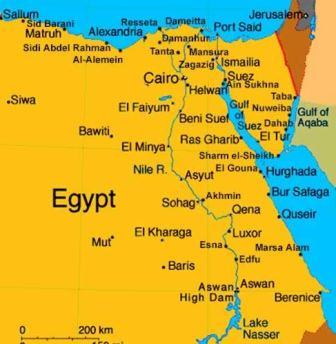
I travelled to Eygpt to work with CARE Egypt, and Josh came along and we made a vacation out of it. We spent 5 days in Cairo, 3 in the Sinai peninsula (2 at a resort on the Red Sea, Dahab, and 1 at Mt. Sinai), and then took a long train ride south along the Nile to spend 3 days in Luxor.

First impressions: fascinating country and somewhat of a sensory overload. It's a middle-income country (basically 2nd world, not in the category of either a 3rd world or a 1st world country), so all of the amneties and infrastructure are in place, which makes travelling much simpler and more comfortable than at the other countries I've recently visited. The mesh of such incredible history with modernity immediately struck us both- for example, the sprawl of the brick slums of Cairo extending to the base of the pyramids. We also became immediately aware of the religious environment - 90% Muslim and 10% Christian - with the profusion of mosques, church steeples and integration of faith into all aspects of life and conversations.

Click here to view all of our pictures.

Read More......

Aug 31, 2007

Cairo

We spent 5 days in the mega-city of Cairo, home to 17 million people. The best part is merely wandering around and observing. It is so dirty and huge and loud and exhausting, but also so stimulating and exciting and beautiful.

A few of the highlights of our time in Cairo:


- We spent an evening with the refugee woman I tutor in atlanta, Selwa, and her neice and nephew. Josh and I have become very close to her and her sons, and she happened to be in Cairo while we were there visiting a bunch of her family that still live there! (They're from sudan but were refugees in cairo for 12 years so they consider it home). They picked us up and took us to Islamic Cairo, which is the ancient islamic quarter of the city. I never would have imagined that I would be visiting a mosque with a woman in a burkha (interestingly, she wears the full burkha (everything but eyes) in Eygpt, but doesn't in Atlanta - she just wears the hijab, or head covering.) Having them as tour guides in this quarter of the city, especially with our visit to Al-Azhar, a mosque and Islamic university that has been functioning since 988 AD, made such a difference in giving us access and insight!


- Ah, the Pyramids of Giza, consisting of 3 pyramids and a large Sphinx - the sole survivor of the Seven Wonders of the World. The sheer size and symmetry must be seen to be believed. I was expecting the width but not the height - they were the tallest human-made objects in the world for 4500 years, until the Eiffel Tower was built. Constructed on pharoahs' orders around 2500 BC, they are composed of over 2 million limestone blocks that each way 2.5 tonnes! Now that's a burial.


- We had a fascinating trip out to the slums where the outcasts of Cairo live in the city's garbage dump, responsible for manually sorting through all of the garbage that they live in. The smell and poverty and unsanitary conditions were quite unlike anything either of us have ever seen. And of course, amidst society's outcasts, a thriving Christian community has emerged. A Coptic priest moved into their midst and started ministering to them, and constructed a huge church in a cave in the stone hill where the people live. It was enormous and stunning and somewhat surreal to see in this country. Click here to read more about St. Simon the Tanner Cathedral, or the "cave cathedral", as it as been nicknamed.

- We had one incredible evening getting lost in the narrow streets of the old part of the city: eating amazing falafel and egyptian pastries from street stalls that charged us a quarter; stumbling upon beautiful old mosques and getting one of the worshippers to let us climb to the top of the minaret, with the most breathtaking view of the night-time city lights; having a shai (egyptian tea) at a picturesque ahwa full of old men playing backgammon; and chancing upon a free cultural performance of Sufi dancing - the whirling dervishes. Just one of those amazing travel moments when everything actually works in your favor rather than being a hassle!

- On our last night, we spent several hours over some delicious Egyptian food with a friend of ours, Darren Kennedy. Through the connection of several mutual friends, we met him and his wife Elizabeth during our studies in Edinburgh. They have been missionaries in Cairo through the PCUSA for 8 years. We had a wonderful time catching up with Darren and discussing their family's work and life in Cairo. Click here to read more about the Kennedy's and their work in Cairo.


Read More......

Aug 28, 2007

Luxor

We took a 10 hour train ride south along the Nile to Luxor, which has been inhabited for 6000 years! It was the capital for much of Pharonic rule and was also the center of religious and ceremonical life in ancient Egypt. It has the most preverved ancient monuments - King Tut's tomb was found here. There's the Valley of the Kings, where many of the tombs of the Pharoah are still in tact - we walked down into 3 of them, amazing tunnels into the heart of the mountains covered in heiroglyphics. There are several temples constructed for various pharoahs for themselves and the gods - we visited Hatshepsut's (the famous woman pharoah), Ramses II's, and Amenhotep II's (called Luxor temple).

And then there's the amazing Karnak temple, our favorite site. It wasn't so much a temple as a complex - it measures about 1 mile by 800 meters. Each successive pharoah would add to the place and try to outdo each other. We just couldn't capture the scale in pictures! There are multiple sanctuaries within it. The most amazing part was the Great Hypostyle Hall - a forest of 134 towering stone pillars, bigger than both St. Peter's in Rome and St. Paul's in London combined!

Beyond the monuments and the history, we enjoyed spending time in a smaller town on the banks of the Nile, with more horses than cars and farmland full of sugarcane.

Read More......

Aug 26, 2007

Sinai

We stayed in Dahab, a Bedouin (desert tribe that are the traditional inhabitants of the Sinai peninsula) fishing village that has turned into a European and Arab resort town on the Red Sea. It was incredibly beautiful and relaxing. We spent a lot of time snorkeling in the coral reef in front of our hotel and saw the most unbelievable marine life. I've never seen anything like the fish and the colors - there are apparantly more types of tropical fish in the Red Sea than anywhere else in the world. So that was a real highlight.

We then took a short bus to the middle of the peninsula to the small Bedouin village at the base of Mt. Sinai. It is the most striking landscape - sooo bare and stark and craggy, but incredibly beautiful. We read the Exodus story before leaving and had such a vivid picture of Moses leading his reluctant people through the desert. No wonder they were complaining! It is so harsh with the bare rock and sand and blinding sun.

The way the Bedouin people still live as nomads, surviving off of such a harsh land, in caves and stone huts, is unbelievable. It's as though nothing has changed in thousands of years. Staying in the village was great - we didn't see a single other tourist while we were there. We stayed at a camp run by a local Bedouin Sheikh and it was a really wonderful experience, although i must admit we were thrilled to check into our nice hotel in cairo and get a hot shower, air conditioning and our own bathroom!

The real highlights of our trip were visiting St. Katherine's Monastery, the monastery at the base of Mt. Sinai (which is locally called Mt. Moses), and climbing the mountain itself. The monastery has been a practicing monastic community since 500 AD, and is the oldest active monastery in the world. They have an incredible collection of iconic art and christian manuscripts that have been passed down throughout the centuries. It was a very spiritually enriching visit.

And then we hiked up the mountain, which was grueling. It's a high mountain to begin with, with some very steep parts, but it was really the incredible heat with the sun beating down with no shade in sight that made it tough on us. But it was a moving pilgrimage for both of us. We read some psalms at the top while watching the sunset, and then hiked down by moonlight (which was tricky, as i of course forgot to pack the flashlight.)

Read More......

Jun 25, 2007

Dubai

View my pictures of Dubai here.

Dubai was crazy. It’s literally a city rising out of the desert, in the middle of nowhere. It felt to me like an incredibly expensive combinatin of Vegas and Disneyland, and you can’t decide to deride it or be fascinated by it. Little bit of both.

A refugee woman I work with in Atlanta, Selwa, has extended family in Dubai, so her neice Reem and nephew Mohammed picked me up with a big red sign with my name. They took me all over the city and didn’t take me back to the hotel until 3 am - and we didn't have dinner until midnight, which is apparantly quite common here!!! I was starving after my long flight!

It was interesting hearing their perspective on the city and its development, as they were both born and raised here. They took me to the beach,
which was beautiful- crystal blue water and the whiteness of desert sand. Then they showed me all of the ridiculous marvels of modern Dubai – that sailboat 7 star hotel is more surreal than you could imagine. Same with the tallest building in the world, the Palm island that extends out into the ocean where some of the world's wealthiest people have homes on individual islands shaped like palm fronds, and the ski resort inside of the mall, which you have to see to believe. It is literally a ski resort - big slopes, lifts, lots of snow, people in snowsuits, and outside it's 110. Crazy. Apparantly each person living in dubai uses 8 times more energy than anyone in the rest of the world. There are more malls than I have every seen in my life, each trying to outdo the others with their extravagance.

After the tour, they took me to this amazing Lebanese place with a spread the size of the table – fresh bread, salads, homemade hummus, incredible schwarmas and kebabs. And of course it's "harem" to thrown food away in Islam, which is incredibly difficult given the unending amount of food that I'm always served in Muslim homes and countries!

The next day I took a bus tour of the old city. I thought that I would be most interested in seeing the historic parts, thinking that they would be more culturally interesting - the old city, the mosques, the ancient markets, the old pearl diving area that put the city on the map, etc. However, most of it has been turned into tourist attractions and it's quite difficult to picture the city as it was - an old pearl diving village. Seeing the mosques was the highlight - the different architecture is really interesting and beautiful. But besides that, the crazy hotels and malls and skyrises are what was culturally interesting. A bit sickening, perhaps, but interesting nonetheless =-).

Read More......

Jun 20, 2007

Bangladesh photos

View my pictures from Bangladesh here.

Bangladesh Statistics
Population: 138.4 million
Urban Population: 26%
Major Ethnic and Linguistic Groups: Bengali - 98%
Religions: Muslim - 83%
Hindu - 16%
Population Growth Rate: 2.06%
Life Expectancy: 61.3 years
Infant Mortality: 66 per 1,000 live births
Under Five Mortality: 77 per 1,000 live births
Maternal Mortality Rate: 400 per 100,000 live births
GNP Per Capita: $370
Percentage of Literate Adult Males: 54%
Percentage of Literate Adult Females: 32%

Read More......

Jun 17, 2007

Thoughts on Bangladesh

Well the highlight of my trip was that I got bumped up to business class on my Emirates flight! I was so excited. I was in the very back of the plan in the middle between 2 very stinky men. And then up to business with mimosas and a tv and incredible vegetable curry and a chair that completely reclined. That is the way to travel internationally, seriously.

As for Dhaka - it's the most densely populated city in the world, and I struggled to feel love and compassion for the mass of humanity - it was much easier to be annoyed! it’s certainly the poorest city I’ve ever been to – everything, no matter how nice, has that beat-up run down look. Even the "wealthy" area looks very shabby and downtrodden. But then there’s the contrast with the vibrancy of people and animals and fruit and so much life everywhere. And the colors - the woman wear the brightest saris, which was interesting - they don't wear hijabs as much. Which I was expecting given that it's a Muslim country. It's an odd mixture of Indian and Islamic culture.

Tourism in Dhaka is nonexistant. So of course that made it incredibly difficult to get around and see anything. I was really only able to be an outside observer of the mosques and markets and life along the river. I tried to walk around by myself but it’s fairly impossible to do so. There are very few women out and about - it’s all men on the streets, at the market, working at the hotel, everywhere, so the moment I step out of the car I am swarmed. I never felt threatened, it was just obnoxious and immobilizing. I have never felt so constrained from actually engaging with the people and the culture - a very frustrating experience.

The best and worst part of the trip was the 8 hour drive south through the country to one of the rural villages where CARE works (see the story I wrote about the small business development projects with women). I got to see so much of the country and the traditional way of life - ancient fishing nets, Islamic madrassa schools with children in uniforms, rice paddy fields, etc. I loved being able to observe everything. The "worst" bit comes in with the madness of the driving, especially once it hit nightfall. A one-lane road through the countryside with cars hurtling toward you with abandon - I was in the front seat and literally had to close my eyes because I was having so many panic attacks that I was about to be hit head-on. We witnessed 3 accidents - a car smashed into a rickshaw and flipped it over, a bus careened off the side of the ride and landed on its side, and, quite disturbingly, a car hit a man and killed him. I saw him laid out in the middle of the road, in full white tunic and hat, with a huge pool of blood draining out of him.

Spending time with the women entrepeneurs was inspiring and really encouraging. And the converstions I had on the drive with the Bengali CARE staff was really interesting as well, learning about Bangladesh's economy, the garment industry (check your clothes - 80% of the industry is now made in Bangladesh), and the role of women in society. I left with a lot of hope for the country and the way that development is occuring there, which is certainly not always the case.

Read More......

Jun 15, 2007

Female entrepeneurs in Bangladesh

I travelled 9 hours south of the capital city of Dhaka down to Chittagong to interview Selina and write her story for CARE. Selina is on the far left and the other 4 women are her employees.

Here is the story that I wrote (caveat: it's for our donors, so it's a particular tone...)

"Selina and her family live in a tiny village in Chittagong, the southeast district of Bangladesh, an area dotted with rolling hills, lush vegetation and rice paddy farms. Only a few years ago, Selina, a bright-eyed woman of 30, lived the typical life of a poor rural woman in this region. She attended school through the 6th grade, when her family pulled her out to help with household duties. She was married to her husband in her mid-teens and bore her first son at 17, followed by a daughter and another son. Her husband worked in the homes of wealthier landowners for a small wage as a daily laborer, and Selina rarely left their small home.

Then, 3 years ago, a CARE representative approached her and asked if she wanted to join the Community Business Group in her village. CARE has implemented more than 90 such groups throughout Bangladesh by working with community leaders to identify the poorest people in each village, helping them organize, and providing trainings. These self-managed groups are primarily made up of women, and they band together to implement initiatives for economic development, including pooling their savings together for investing in activities such as agriculture and small businesses.

Traditionally one of the most conservative parts of the country, CARE’s work with women in Chittagong initially met significant resistance from village leaders. In the past few years, however, CARE has seen much progress as communities are seeing the benefits of involving women in society and in the workforce. The Community Business Groups have proven to be a powerful way for women to collaborate on income-generating opportunities for themselves and their families. With her husband’s approval, Selina joined her village’s group and attended one of the trainings conducted by CARE on basic financial management. She quickly showed an aptitude for numbers and was nominated as the group’s cashier in 2005.

When CARE decided to implement a new program called the Rural Sales Program, an innovative collaboration between CARE, rural women, and the private sector, they decided to draw on women in the Community Business Groups to participate. CARE has been working in Bangladesh since 1949, and has focused on economic development for over 20 years. In the Rural Sales Program, CARE helps rural women gain access to employment opportunities with the private sector, training them in sales, accounting, and business skills and organizing them as an enterprise group of sales representatives. In the process, the private sector is able to enter the rural market and rural people gain expanded access to products.

Bata, an international shoe company, agreed to partner with CARE in the Rural Sales Program early on. When CARE was looking for a manager of the Bata shop’s hub in the local village market, they approached Selina. “I think they came to me because of my potential and skill with numbers,” she says. The Community Business Group agreed to invest in her business and she opened the shop in 2006, becoming the only woman seller in the marketplace. “When I began, all of the other shop managers in the market saw me as a woman. But now they see me as a businessperson, a competitor, and they don’t even notice that I’m a woman any more because my business is the most popular in the neighborhood.” Last year, Selina’s shop was the most successful sales hub of Bata shoes in Bangladesh, and the company honored her at a ceremony and awarded her a cell phone.

The shop is well-stocked and meticulously organized, with shoes displayed on racks from floor to ceiling and snacks and toiletries hanging in cabinets behind the counter. Selina has expanded her business to include Square snack products and Unilever toiletries, other international companies partnering with CARE in the Rural Sales Program. Her shoes have become a sought-after luxury item, bringing in larger dollar amounts, whereas the snacks and small soaps and toothpastes are the most commonly purchased item, giving her consistent income on a day-to-day basis. To increase the scope of her business beyond the marketplace, Selina has employed 4 women from different villages as saleswomen, responsible for taking the shop’s goods door to door in their areas.

It is very uncommon for women to be working at all, and especially rare for them to be managers. Selina notes, “It was difficult during the first few months. People didn’t believe in me or my products, saying that they weren’t really from an international company and that the quality was better if you buy in the city. I had to gain their respect.” The saleswomen she employs agree, speaking of their challenges in the beginning. “People didn’t trust that we were really from Bata when we knocked on their doors. Now they seek us out to place orders. We even received several orders from schools to supply the shoes for uniforms!”

Selina’s husband quit his job as a day laborer and they are now operating the shop together, enjoying the benefits of a family-run business. Their youngest son, who has yet to begin school, ‘helps’ in the shop during the day. Selina boasts that she has the income for her older son and daughter to continue on to secondary school, noting that their education level will soon surpass her own. For Selina, perhaps the most unusual feature of her new role is her increased mobility, which is quite unusual for women in this area who rarely leave the confines of their homes, much less their villages. She proudly explains that she frequently travels from the village to the Bata office in the capital city of Chittagong, a journey of about 2 hours, in order to restock her supplies.

Most importantly, Selina and her employees are thrilled with the increased livelihood security and quality of life that their new jobs provide. Assia, an elderly widow, was struggling to provide for her 5 daughters and 1 son. From the income she has earned as a saleswoman, she was able to move into better quality housing, send her daughters to school, and purchase poultry to raise for additional income. She sums up the feelings of the women, “Working here has improved my family’s livelihood and is better than working as a day laborer. It is dignified. I am selling products of an internationally renowned company.”

Selina and her employees have seen great success in only a year, and they plan to continue expanding the scope of their business and increasing their capital. They hope to move to a larger shop, which barely holds all of the products for sale, and make it into more of a showroom. Throughout Bangladesh, women like them are making similar strides through the Rural Sales Program. After only 2 years of the program, over 1,000 formerly destitute rural women are currently employed as a powerful sales force, and more and more companies are starting to take notice."

Read More......